Educational Content Creation
Creating educational content that genuinely transforms learners requires far more than simply recording information and publishing it. Whether you’re developing corporate training modules, academic courses, or professional development programs, the difference between content that sticks and content that’s immediately forgotten lies in how well you understand the science of learning, the constraints of human cognition, and the practical realities of content delivery.
Educational content creation sits at the intersection of pedagogy, technology, and design thinking. It demands that creators balance theoretical learning principles with real-world constraints like budgets, timelines, and learner availability. This comprehensive exploration covers the foundational approaches that make educational content effective: from capturing and maintaining learner attention, to designing for how memory actually works, to leveraging emerging technologies for high-stakes training scenarios.
The journey from novice to proficient educational content creator involves mastering several interconnected domains. Each decision—from choosing between video and text, to structuring microlearning sequences, to justifying investment in immersive technologies—carries implications for learner outcomes, production costs, and long-term sustainability.
Understanding Learner Engagement and Motivation
The most brilliantly designed content fails if learners disengage before completing it. Engagement isn’t a nice-to-have feature; it’s the foundation upon which all learning rests. Think of learner attention like a campfire: it needs constant fuel and occasional stirring, or it dies out completely.
The dopamine loop in learning explains why some educational experiences feel rewarding while others feel like drudgery. When learners experience small wins—correctly answering a question, completing a module, seeing progress visualized—their brains release dopamine, creating a positive association with the learning activity. Effective educational content strategically engineers these moments by incorporating frequent check-ins, progress indicators, and appropriately challenging tasks that learners can successfully complete.
Interactive elements like polls and quizzes serve dual purposes: they assess understanding while simultaneously re-engaging attention. The key is timing interaction points precisely rather than arbitrarily. Research on attention spans suggests that engagement naturally wanes every seven to ten minutes, making this the ideal interval for inserting questions, discussions, or brief activities. Similarly, choosing between chat-based and voice-based interaction strategies depends on your learners’ context—asynchronous chat works better for distributed teams across time zones, while voice interactions create stronger social presence in real-time sessions.
Identifying signs of disengagement early allows for intervention before learners give up entirely. In digital environments, analytics can reveal warning signals:
- Extended periods of inactivity on a page without scrolling or interaction
- Rapidly clicking through content without pausing to read or watch
- Abandoning modules at consistent points, suggesting content barriers
- Declining participation in optional activities over time
Implementing Microlearning for Knowledge Retention
Microlearning strategies recognize a fundamental truth: shorter, focused content often produces higher retention than lengthy comprehensive modules. This isn’t about oversimplifying complex topics, but rather about respecting how human memory consolidates information. Like trying to drink from a fire hose versus sipping from a cup, learners can only process so much at once.
Analyzing retention rates between short and long content reveals that learners typically remember concepts better when information is chunked into five- to seven-minute segments, each addressing a single learning objective. However, the challenge lies in avoiding over-fragmentation—breaking complex topics into so many tiny pieces that learners lose sight of how components connect to form a coherent whole.
Scripting techniques for brevity require ruthless editing. Every sentence should serve the learning objective; tangential information, however interesting, dilutes impact. Consider using the “one concept, one screen” principle: each page or slide should introduce, explain, and reinforce a single idea before moving forward.
The choice between video and infographics for micro-content depends on what you’re teaching. Processes, demonstrations, and anything involving movement benefit from video. Relationships, hierarchies, comparisons, and data are often clearer in well-designed infographics. Many creators default to video because it feels more engaging, but static visuals that learners can study at their own pace frequently outperform video for conceptual content.
Sequencing micro-units for mastery requires intentional scaffolding. Each unit should build on previous knowledge while preparing learners for what comes next. Think of it as constructing a staircase rather than presenting disconnected platforms—learners need clear pathways between concepts.
Designing for Cognitive Load and Working Memory
Human working memory has strict limits—most people can hold only three to five chunks of information simultaneously. Educational content that ignores these constraints overwhelms learners, triggering anxiety and abandonment. Understanding and managing cognitive load represents perhaps the most important technical skill in content creation.
The Three Types of Cognitive Load
Intrinsic load refers to the inherent difficulty of the material itself. Teaching quantum physics carries higher intrinsic load than teaching email etiquette. Extraneous load stems from how information is presented—poor design, unclear navigation, and distracting elements add cognitive burden without educational benefit. Germane load is the desirable mental effort of building understanding and creating mental schemas.
Effective educational design minimizes extraneous load, manages intrinsic load appropriately for the learner’s level, and optimizes germane load to promote deep learning.
Applying the Segmenting Principle
The segmenting principle, backed by extensive research in multimedia learning, recommends breaking continuous presentations into learner-controlled segments. Rather than presenting a fifteen-minute uninterrupted video, divide it into three five-minute segments with brief pauses between each. These pauses allow learners to process information before new content arrives, dramatically improving comprehension and retention.
Avoiding the Split-Attention Effect
Split-attention occurs when learners must mentally integrate information from multiple sources—like reading text on one side of the screen while viewing a diagram on the other. This integration process itself consumes cognitive resources. The solution is integrating text directly into visuals or using audio narration synchronized with on-screen graphics, allowing the visual and auditory channels to work in parallel rather than competing for visual attention.
Choosing between audio and text for complex explanations depends on permanence needs. Transient information delivered via audio works well for straightforward explanations but creates problems when concepts are dense or unfamiliar. Text allows learners to reread and control pacing—critical when managing high intrinsic load for beginners.
Managing and Curating Educational Resource Libraries
As educational programs mature, organizations accumulate vast libraries of training materials. Without systematic curation, these libraries become digital junkyards where finding the right resource takes longer than creating a new one. Strategic resource management transforms content from a cost center into a genuine asset.
Auditing existing training materials begins with asking hard questions: Is this content still accurate? Does it align with current learning objectives? Do completion and assessment data suggest it’s effective? Many organizations discover that 30-40% of their content library is outdated, redundant, or demonstrably ineffective.
Tagging and categorizing assets for retrieval requires a thoughtful taxonomy. Effective systems typically include multiple dimensions:
- Topic and subtopic (what the content addresses)
- Learning objective (what learners will be able to do afterward)
- Format (video, document, interactive module, assessment)
- Duration (time commitment required)
- Prerequisite knowledge level (beginner, intermediate, advanced)
The buy-versus-build content strategy decision depends on specificity and scale. Off-the-shelf content works well for universal skills like project management fundamentals or software tutorials for common applications. Custom development becomes necessary when addressing organization-specific processes, proprietary systems, or highly specialized technical roles.
Avoiding copyright infringement in training requires vigilance. Using screenshots from third-party software, incorporating music, or pulling images from internet searches all carry legal risks. Establishing clear guidelines around licensed stock media, original creation, and fair use protections prevents costly mistakes.
Updating assets cyclically ensures content remains relevant without requiring constant monitoring. Establish review schedules based on content volatility—technical documentation for rapidly evolving software may need quarterly reviews, while foundational concepts in fields like mathematics may only require updates every few years.
Leveraging Immersive Technologies and Simulations
Virtual reality and simulation-based training excel in scenarios where real-world practice carries high stakes, significant costs, or safety risks. Imagine training surgeons, pilots, or emergency responders—mistakes in real environments can be catastrophic, but simulations provide safe spaces for repeated practice until competency is achieved.
Justifying the high cost of VR production requires calculating the cost of alternatives. If sending employees to physical training facilities costs thousands per person in travel and accommodations, if equipment for hands-on practice is prohibitively expensive, or if mistakes during real-world training could result in injuries or damaged equipment, VR’s upfront investment often proves economical when amortized across multiple learners.
Scripting branching narratives for simulation creates realistic decision-making environments. Rather than linear presentations, learners face choices with consequences—choosing one path closes others and produces different outcomes. This approach mirrors real-world complexity and helps learners develop judgment, not just knowledge.
The choice between 360-degree video and full 3D VR environments involves tradeoffs. 360 video costs less to produce and runs on simpler hardware, but offers limited interactivity—learners can look around but not manipulate objects or explore freely. Full 3D VR enables rich interaction and procedural practice but requires specialized development skills and more powerful hardware.
Preventing simulator sickness—the nausea and disorientation some users experience in VR—requires attention to design details like maintaining high frame rates, minimizing artificial movement, and providing stationary reference points. Deploying VR hardware at scale introduces logistical challenges around device management, hygiene protocols, technical support, and ensuring adequate physical space for safe use.
Creating Specialized Content for Niche Roles
Developing training for highly specific roles—whether that’s operating proprietary industrial equipment, following organization-specific compliance procedures, or mastering specialized software configurations—presents unique challenges. The audience is small, subject matter expertise is concentrated in a few individuals, and content becomes outdated quickly as processes evolve.
Justifying the ROI of custom content for small audiences requires looking beyond simple per-learner costs. Consider the cost of knowledge loss when experienced employees leave, the productivity impact of extended learning curves, and the risk of errors from inadequate training. For critical niche roles, even content serving only a handful of learners annually may justify significant investment.
Extracting knowledge from reluctant subject matter experts—those too busy, too modest, or too uncertain about their teaching ability—requires specific approaches. Structured interviews with concrete examples (“Walk me through the last time you did X”), screen recordings with narrated explanations, and shadowing experts during actual work often capture tacit knowledge that experts struggle to articulate in formal documentation.
The in-house versus outsourced boutique decision for niche content often favors internal creation. External agencies may struggle to grasp highly specialized subject matter quickly enough to be cost-effective. However, boutique firms specializing in your industry can bring production quality and instructional design expertise that internal teams lack.
Avoiding rapid obsolescence of niche content requires building modularity into design. Rather than creating monolithic courses that require complete rebuilds when details change, structure content so individual segments can be updated independently. A training program on using specialized software, for instance, might separate interface navigation, core concepts, and specific procedures—allowing you to update navigation sections when the interface changes without rebuilding conceptual explanations.
Developing Technical Skills Training
Training that targets tangible, measurable technical abilities—whether coding, using specialized software, operating machinery, or performing technical procedures—requires fundamentally different approaches than conceptual education. Learners need opportunities for hands-on practice with immediate feedback, not just explanations of how things work.
Building effective sandbox environments provides safe spaces for experimentation. In software training, this might mean creating test databases that learners can manipulate without risking real data. For equipment operation, it could involve simulators or training-mode devices. The key principle is removing the fear of breaking something valuable, which allows learners to explore, make mistakes, and develop genuine proficiency.
Assessing coding proficiency and similar technical skills requires authentic performance tasks, not multiple-choice questions. Can the learner write functioning code to solve a novel problem? Can they diagnose and fix an error they’ve never encountered before? Assessment should mirror actual work demands.
The debate between video tutorials and documentation often misses the point—effective technical training typically requires both. Videos excel at demonstrating procedures and showing what success looks like. Written documentation provides reference material for later use and allows learners to work at their own pace. The combination is stronger than either alone.
Preventing “tutorial hell”—where learners can follow step-by-step instructions but can’t perform tasks independently—requires progressively removing scaffolding. Early practice might involve detailed guidance, but subsequent exercises should reduce support, eventually presenting only the problem without procedural hints. This graduated challenge builds genuine capability rather than dependency.
Scheduling maintenance learning acknowledges that technical skills decay without use. Particularly for infrequently performed but critical tasks, periodic refreshers prevent knowledge loss. A simple system of scheduled micro-refreshers—brief reviews of key procedures every few months—maintains readiness without requiring full retraining.
Mastering educational content creation ultimately means understanding that effective learning experiences emerge from intentional design decisions grounded in evidence about how people actually learn. Whether you’re choosing media formats, structuring information, managing resources, or adopting new technologies, the learner’s cognitive reality should drive every choice. By building expertise across these interconnected domains—from maintaining engagement through understanding cognitive load to leveraging appropriate technologies—you’ll create educational content that doesn’t just deliver information, but genuinely transforms capability.

How to Keep a Tech Team Razor-Sharp When Tools Change Monthly
The solution to a rapidly evolving tech stack isn’t more training courses; it’s engineering a system where active problem-solving becomes the primary learning mechanism. Passive learning, like watching videos or reading docs, creates knowledge illusions without building applicable skills. Real-world…
Read more
How to Create Training for Roles That Are Too Niche for Generic Courses?
As a Learning & Development Manager, you face a recurring paradox. You have a small group of highly specialized experts—think mainframe architects, subsea engineers, or forensic accountants—who are critical to your operations. Yet, finding effective training for them feels impossible….
Read more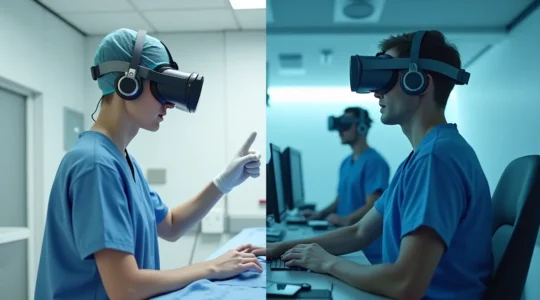
Risk-Free Surgical and Pilot Training: How VR Engineers Human Reliability
VR training’s true value isn’t just safety—it’s the ability to systematically engineer human reliability and generate quantifiable performance data. Active, haptic-enabled VR builds muscle memory far more effectively than passive observation, with studies showing dramatic improvements in procedural competence. Strategic…
Read more
How to Build a Reusable Content Library and Save 20+ Hours Per Course
Building a reusable content library is not about storage; it’s about establishing a system of governance that makes every asset discoverable and reliable. A robust metadata and naming strategy is the non-negotiable foundation for findability and a true single source…
Read more
How to Simplify Complex Technical Training Without Dumbing It Down?
The key to effective technical training isn’t simplifying the content, but systematically managing the learner’s cognitive load to align with the brain’s processing limits. Extraneous, decorative elements actively hinder learning by consuming precious working memory. Chunking content by “learner goals”…
Read more
How to Condense a 10-Page Policy Into a 2-Minute Video?
Contrary to popular belief, creating effective microlearning from dense policy isn’t about cutting content—it’s about surgically extracting performance-critical actions and re-architecting them for high-retention formats. The human brain is wired to forget. Standard training overloads cognitive capacity, making information loss…
Read more
How to Boost Live Session Interaction Rates Above 80%?
Stop blaming passive audiences; the silence is a data point telling you the session’s psychological architecture has failed. High interaction isn’t about charisma, it’s about engineering specific triggers like dopamine loops from instant feedback. Effective engagement uses diagnostic tools—like sequential…
Read more