
Stopping the “brain drain” requires shifting from last-minute tactics to a proactive system that transforms individual expertise into a durable organizational asset.
- The financial and operational risk of knowledge loss far exceeds an employee’s salary, representing decades of unwritten experience.
- A structured process must distinguish between explicit knowledge (what) and tacit knowledge (how), using different tools for each.
Recommendation: Begin by conducting a “Bus Factor” audit to map your organization’s most critical knowledge silos and single points of failure.
The departure of a senior employee is more than a line item in a turnover report; it’s a slow-motion organizational crisis. Every day, seasoned experts walk out the door, taking with them decades of invaluable, undocumented institutional wisdom. For a Chief Human Resources Officer, this “brain drain” isn’t a future problem—it’s an active threat to operational continuity, innovation, and competitive advantage. The scale of this exodus is staggering, and the standard responses are failing us.
Many organizations default to familiar but flawed tactics: last-minute exit interviews that scratch the surface, generic mentoring programs without structure, or mandates to “document everything” that result in vast, unused repositories of outdated information. These approaches treat the symptoms, not the disease. They fail because they treat knowledge as a simple commodity to be collected, rather than a complex, living asset that must be cultivated and transferred with intention.
The true solution lies not in more documentation, but in a more intelligent system. What if the key isn’t just capturing what your experts *know*, but fundamentally changing *how* that knowledge flows through your organization? This requires a strategic shift—from reactive collection to proactive transfer. It’s about building a resilient, living system that identifies critical expertise, incentivizes sharing, and systematically transfers it to the next generation of leaders long before the farewell party is even planned.
This guide provides a strategic framework for exactly that. We will dissect the true cost of inaction, explore systemic solutions for structuring mentorship, choose the right tools for the right knowledge, and dismantle the cultural barriers that prevent experts from sharing. This is your blueprint for turning the tide on the brain drain.
Summary: A Strategic Framework for Preserving Institutional Wisdom
- Why Losing One Senior Engineer Costs More Than Their Annual Salary?
- How to Pair Mentors and Mentees Without Creating Personality Clashes?
- Written SOPs or Screen Recordings: Which Is Easier to Maintain?
- The “Job Security” Mindset That Prevents Team Sharing
- When to Start the Knowledge Transfer Process for a Departing Exec?
- The “Bob Knows How to Do It” Problem That Threatens Standardization
- When to End a Mentorship: The Signs It Has Run Its Course?
- How to Find a Mentor Who Will Actually Accelerate Your Career?
Why Losing One Senior Engineer Costs More Than Their Annual Salary?
The departure of a tenured expert isn’t just a recruitment cost; it’s a catastrophic loss of embedded intellectual capital. A senior engineer’s value isn’t just in their daily tasks, but in their tacit knowledge: the intuitive understanding of how complex systems interact, the memory of why a critical decision was made a decade ago, and the network of informal relationships that make things happen. This deep expertise is a competitive moat, and when it evaporates, the organization is left vulnerable. For example, Michelin America faces a challenge where 40% of its workforce is approaching retirement age, with an average tenure of 25 years among them. The loss is not just 40% of their people, but a significant portion of their operational memory.
The cost multiplies through lost productivity, project delays, and repeated mistakes. The successor, no matter how talented, must re-learn a decade of lessons through trial and error. According to one calculation by a former General Mills employee, an organization that loses 30 people with an average of 30 years of experience has effectively lost nearly 1,000 years of collective knowledge. This isn’t just a “brain drain”; it’s a hollowing out of the organization’s core competency. The true cost includes the projects that will never be started, the disasters that will no longer be averted, and the institutional wisdom that must be painfully re-acquired.
How to Pair Mentors and Mentees Without Creating Personality Clashes?
Traditional mentorship programs often fail because they are treated like a social lottery, hoping a good “chemistry” will magically emerge between a senior expert and a junior employee. When pairings are based on simple availability or hierarchy, the result is often awkwardness, disengagement, and wasted time. The solution is to deconstruct the idea of a single, all-encompassing “mentor” and implement a structured, role-based system that separates distinct functions. This requires facilitation and clear definitions of roles, not just wishful thinking.

As the image above suggests, a facilitated approach creates a neutral ground for success. A key strategy is to distinguish between a “Skill Mentor” and a “Career Sponsor.” The retiring expert is perfectly positioned to be the Skill Mentor, focused exclusively on technical knowledge transfer. The Career Sponsor, another leader within the organization, focuses on network introductions, political navigation, and long-term advancement. This separation prevents personality clashes from derailing the critical transfer of skills. A mentee might not connect personally with the retiring engineer, but they can still learn the process; their career guidance can come from someone else. This is even more crucial when considering that a 2016 survey reveals more than 50% of Baby Boomers plan to work past age 65, making them an available but distinct cohort that requires a structured engagement model.
The following table outlines this strategic separation, providing a clear framework for building a program that focuses on outcomes, not just relationships.
| Aspect | Skill Mentor (Retiring Expert) | Career Sponsor (Other Leader) |
|---|---|---|
| Primary Focus | Technical knowledge transfer | Career advancement guidance |
| Meeting Frequency | Weekly hands-on sessions | Monthly strategic discussions |
| Duration | 12-18 months pre-retirement | Ongoing throughout career |
| Success Metrics | Skills demonstrated competency | Promotions and network growth |
| Key Activities | Process documentation, shadowing | Networking introductions, visibility |
Written SOPs or Screen Recordings: Which Is Easier to Maintain?
The debate between written Standard Operating Procedures (SOPs) and video-based instructions misses the fundamental point: the choice of format must be dictated by the type of knowledge being transferred. Insisting on a single method for all processes is a recipe for failure. Explicit knowledge—facts, rules, and specifications—is well-suited for written SOPs. This content is declarative, changes infrequently, and is essential for compliance and reference. Think safety regulations or technical specs.
However, tacit knowledge—the intuitive “feel” of a process, the subtle cues an expert reads, the rhythm of a complex workflow—is nearly impossible to capture in text. This is where screen recordings and video tutorials excel. They capture the *how*, not just the *what*. For maintenance, the challenge shifts. Written SOPs are easy to edit but hard to update at scale, while videos are hard to edit but can be replaced entirely. Modern organizations are solving this by creating a central “corporate YouTube,” as described in one case study. These platforms use AI to automatically transcribe, chapterize, and index video content, making every spoken word searchable. This turns a library of videos into a living, queryable knowledge base, drastically reducing training costs and capturing expertise that would otherwise be lost.
A strategic knowledge transfer plan uses a hybrid approach, guided by a decision framework:
- For procedural “feel”: Use screen recordings to capture the nuance of a process on a specific software or machine.
- For compliance and rules: Create written SOPs that are easy to reference and audit.
- For complex procedures: Implement a hybrid model using tools like Scribe or Loom, which generate both a video walkthrough and a text-based, step-by-step guide simultaneously.
- For long-term maintenance: Deploy AI-powered systems that can automatically flag tutorials where the user interface has changed, prompting a necessary update.
The “Job Security” Mindset That Prevents Team Sharing
The single greatest barrier to knowledge transfer is often psychological, not technical. For a generation of workers who built careers in an era where expertise was a primary source of job security, the request to “share everything you know” can feel like a threat. As Bridgeworks Research aptly puts it, for many retiring experts, “Information was power, and you held it close to the chest. Now we are asking them to give away that safely guarded advantage for free.” This isn’t selfishness; it’s a deeply ingrained survival instinct from a different professional world. Ignoring this mindset is why so many initiatives fail.
Information was power, and you held it close to the chest. Now we are asking them to give away that safely guarded advantage for free.
– Bridgeworks Research, Knowledge Transfer: Empowering Baby Boomers
This challenge is widespread, as research shows that 83% of employers report having significant numbers of Baby Boomers at or approaching retirement age. The solution is not to demand sharing, but to reframe it. The goal is to transform the role of the senior expert from a “keeper of secrets” to a celebrated “builder of legacies.” This requires creating a new status: the “Expert Emeritus.” This role formally recognizes and rewards the act of teaching and mentorship as the final, most prestigious phase of a distinguished career. It’s a cultural shift from hoarding knowledge for security to sharing it for legacy.
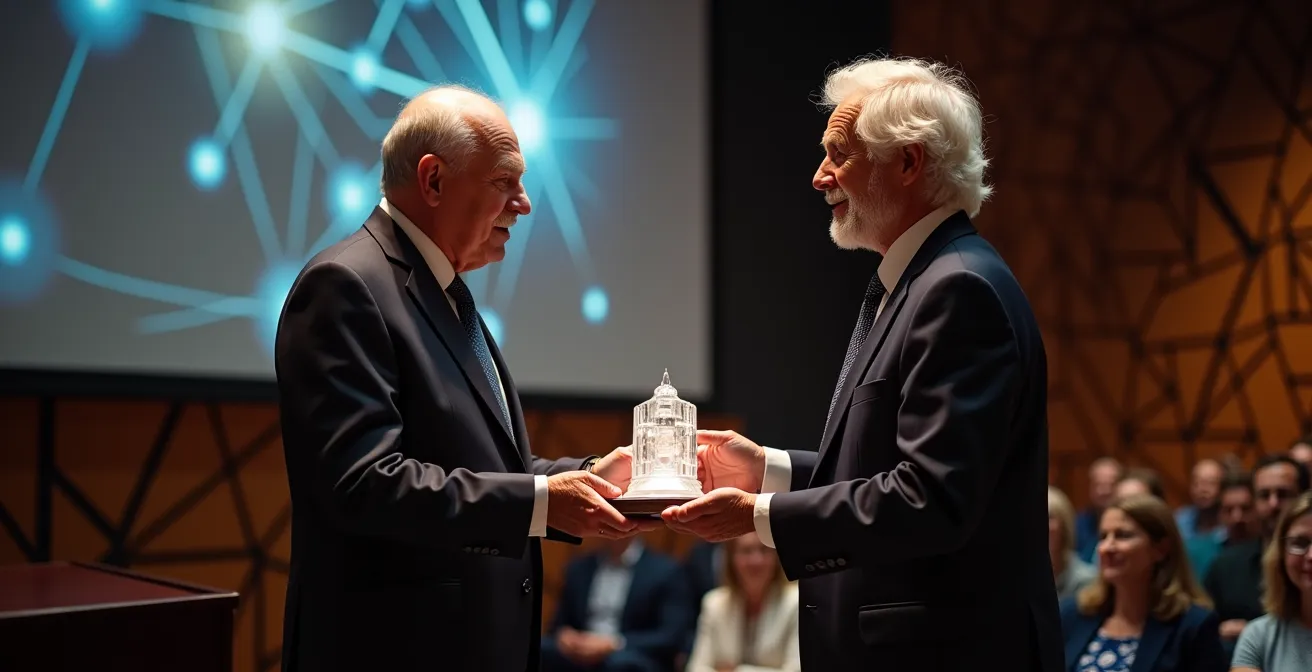
Instead of fearing obsolescence, the expert is celebrated for ensuring the organization’s future success. This can be supported by formal recognition, bonuses tied to successful knowledge transfer, or opportunities for post-retirement consulting. By honoring the contribution, you dismantle the fear.
When to Start the Knowledge Transfer Process for a Departing Exec?
The most common mistake in succession planning is starting too late. Knowledge transfer is not an exit interview task; it’s a multi-year strategic process. The urgency is underscored by a demographic tsunami: the Retirement Income Institute reports on the “Peak 65” phenomenon, noting that 11,200 Americans turn 65 every day from 2024 through 2027. Waiting for a retirement announcement is an admission of failure. The process should begin the moment an employee is identified as holding critical, single-source knowledge—regardless of their stated retirement date.
The ideal timeline, however, is not one-size-fits-all. It depends on the “knowledge half-life”—the rate at which information in a specific domain becomes obsolete. A social media strategy from 2022 is ancient history; the principles of structural engineering are far more stable. A strategic CHRO must categorize critical roles based on their knowledge volatility to create a tailored transfer timeline. For high-volatility roles, knowledge transfer must be a continuous, real-time process. For stable, low-volatility roles, a more traditional 2-3 year handover may suffice.
This timeline helps prioritize efforts and allocate resources effectively, moving the organization from a panic-driven reactive mode to a strategic, proactive stance.
| Domain Type | Knowledge Volatility | Transfer Timeline | Recommended Approach |
|---|---|---|---|
| Digital Marketing | High (changes monthly) | Continuous/Always-on | Real-time documentation |
| Manufacturing Law | Low (stable for years) | 2-3 year handover | Formal succession plan |
| Technical Operations | Medium (quarterly updates) | 12-18 months | Phased knowledge transfer |
| Client Relationships | Variable | 6-12 months minimum | Gradual introduction process |
The “Bob Knows How to Do It” Problem That Threatens Standardization
Every organization has a “Bob”—that one indispensable person who holds the unwritten manual to a critical process in their head. When a system goes down, the first call is to Bob. When a complex report is needed, everyone waits for Bob. While Bob is a hero, he is also your organization’s single greatest point of failure. This is the “Bus Factor” problem: how many people need to be hit by a bus (or retire, or win the lottery) before a critical function grinds to a halt? A low Bus Factor is a massive, unacknowledged operational risk, especially in specialized fields. For instance, U.S. Bureau of Labor Statistics data shows the concentration of retiring expertise is high in key areas, with 27% of architecture and engineering workers being 55 years or older.
Solving the “Bob” problem requires moving from reliance on individuals to standardized, resilient processes. This is not about diminishing Bob’s value, but about protecting the organization from his absence. The first step is a formal risk audit to identify every instance of a low Bus Factor. This involves creating a Knowledge Cartography Map that visually shows who holds undocumented information and where the most dangerous knowledge silos exist. Once identified, the solution is systematic and non-negotiable: Forced Deputization. Key personnel are required to take 2-4 week rotations where they are completely responsible for a process normally handled by “Bob,” while Bob is either on vacation or assigned to other duties. This forces the knowledge out of one person’s head and into a documented, repeatable system.
Action Plan: Implementing a Bus Factor Audit
- Score each critical business process on its Bus Factor, with a score of 1 representing a red flag that requires immediate intervention.
- Create a visual Knowledge Cartography Map that clearly illustrates who holds critical, undocumented information across the organization.
- Mandate “Forced Deputization” rotations of 2-4 weeks annually for all identified knowledge silos to ensure redundancy.
- Require the designated deputies to run the critical processes solo during their rotation periods, documenting any gaps or questions that arise.
- Track and report Bus Factor scores as a formal Key Performance Indicator (KPI) to senior leadership on a monthly or quarterly basis.
When to End a Mentorship: The Signs It Has Run Its Course?
A successful mentorship shouldn’t last forever. Its purpose is to transfer specific capabilities, and like any project, it needs a defined endpoint. An indefinite mentorship risks becoming a crutch for the mentee or a burden for the mentor. Ending a mentorship isn’t a failure; it’s a graduation. The key is to define success upfront and recognize the signs that the core objectives have been met. A best practice is to begin every formal skill mentorship with a signed charter outlining 3-5 measurable skills to be transferred.
The transition from dependency to autonomy is the clearest sign of success. As one research group notes, the goal is reached when “The mentee stops asking ‘How do I do this?’ and starts asking ‘What do you think of this improvement I’m proposing?'” This shift from seeking instruction to seeking validation on an independent idea is the ultimate indicator that the knowledge has not only been transferred but also integrated. The mentee is no longer just executing a process; they are capable of improving it.
The mentee stops asking ‘How do I do this?’ and starts asking ‘What do you think of this improvement I’m proposing?’
– Knowledge Transfer Best Practices, Bridgeworks Generational Research
This graduation should be a formal event, not an awkward fizzling out. A structured off-boarding process confirms the transfer and captures lessons for the overall program. A goal-based graduation process should include:
- Quarterly competency assessments against the initial goals defined in the charter.
- A formal graduation review where the mentee demonstrates their mastery of the skill in a real-world task.
- A mandatory retrospective session with the program manager to discuss what worked and what could be improved.
- Archiving key lessons learned into a best practices library to refine future mentorships.
Key Takeaways
- Knowledge drain is a quantifiable financial risk, not just a human resources issue.
- A systemic approach, separating skill mentorship from career sponsorship, is more effective than informal pairings.
- The culture must be shifted to reward knowledge sharing as a legacy-building activity, not a loss of power.
How to Find a Mentor Who Will Actually Accelerate Your Career?
From an organizational perspective, this question should be rephrased: “How do we build a program that produces mentors who accelerate careers and institutional knowledge?” The answer is not to leave it to chance. A world-class knowledge transfer ecosystem is a powerful tool for leadership development and retention, especially when research reveals the urgent need, showing 71% of Millennials planning to leave are unhappy with leadership skills development. An effective program is a strategic imperative.
A truly impactful program goes beyond the traditional top-down model. One of the most powerful modern strategies is reverse mentoring. In this model, younger employees are paired with senior executives to teach them about new technologies, digital trends, and social media platforms. This has a dual benefit: it upskills the senior leadership team while simultaneously creating a foundation of mutual respect. When a senior VP depends on a junior analyst for guidance on LinkedIn strategy, it breaks down hierarchical barriers and builds natural, bidirectional pathways for knowledge to flow when the roles are eventually swapped.
Ultimately, the organization’s role is to be an active matchmaker and facilitator. This means creating a formal system where employees can identify their skill gaps and be connected with the right internal experts. It involves providing training for mentors on how to teach effectively and for mentees on how to drive the relationship. A successful program doesn’t just “find” mentors; it cultivates an entire ecosystem where expertise is visible, accessible, and rewarded. This transforms the organization from a collection of siloed experts into a true learning community.
The time for passive observation is over. The first step in securing your organization’s future is to actively map its present vulnerabilities. To begin transforming your approach from reactive to strategic, conduct a comprehensive audit of your institutional knowledge risks today.
Frequently Asked Questions on Capturing Retiree Knowledge
What is the biggest challenge in knowledge transfer?
Beyond logistical issues, the biggest challenge is often cultural and psychological. Many senior experts come from a work culture where “information is power,” making them hesitant to share knowledge they perceive as their primary source of job security. Overcoming this requires reframing knowledge sharing as a legacy-building activity and formally recognizing it as a high-value contribution.
How do you measure the success of knowledge transfer?
Success can be measured through a combination of qualitative and quantitative metrics. Key indicators include: competency assessments where a mentee demonstrates mastery of a new skill, a reduction in errors or “right-first-time” rates for a specific process, a decrease in the time-to-proficiency for new hires in a role, and formal sign-off from the retiring expert that their successor is prepared.